1st Gear
Practising with a Parent in the Family Car
A learner car is the best part of a tonne of metal, and for the first month the only thing between it and a wall is whoever sits in the passenger seat. Most of the time that is a parent. Willing, free, no diary to book around. Good. Use it. Just know that a parent teaches the motor the way they drive it now, and the way they drive it now is full of things a tester marks.
None of that is a reason to skip the family miles. The miles are where a manoeuvre stops being frightening and turns into something your hands do without asking. An instructor gives you the correct method in an hour. The motor only believes it after a few hundred quiet miles. That is the parent's half of the job, and it is the cheap half. Do not waste it teaching the wrong thing.
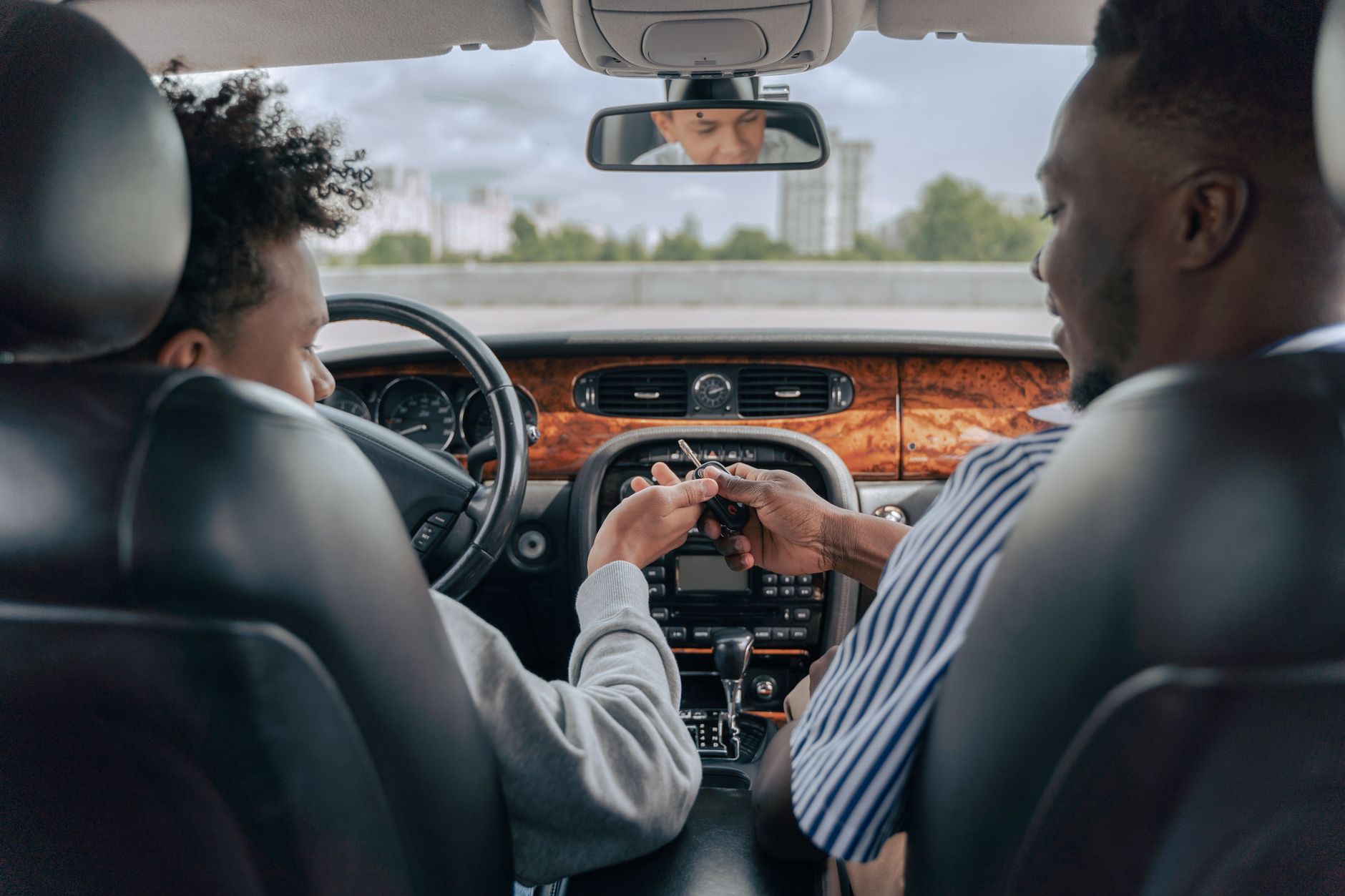
What the family motor is good for
Hours. The same junction, the same hill, the handy run to the shop and back until none of it lifts your pulse. Repetition is what beds a skill in, and repetition is exactly what a paid lesson has no time for. Let the parent's car be the place you rack up the boring miles.
The faults a parent hands you without meaning to
Here is where it turns. Twenty or thirty years of driving alone, with nobody marking the sheet, and a habit drifts. The parent stops noticing it. The learner copies it clean, because the learner copies everything. Watch for these:
- Coasting to a junction in neutral. No engine braking, no drive to pull you clear of trouble. The motor is just rolling, and a tester sees it straight away.
- Riding the clutch at every hold, foot resting on it like a footrest. That is a worn clutch and a mark on the sheet you did not need.
- One hand on the wheel and a palm draped over the gearstick. Fine on a straight road at forty. Useless the second the road asks for two hands.
- Braking late and hard because the gap was read late. Load, mirror, gap. Read it early and the motor never has to snatch.
- Rolling through a line that has been a full stop for thirty years and never once been pulled for it.
All of it is normal to the parent. All of it is a fault to a tester. And here is the part that matters: once you have done it a hundred times, that's a habit now, not a decision. The test checks the habit, not your good intentions on the day.
The instructor sets the method. The parent supervises you doing it and does not overwrite it with their own version. If the lesson said both hands stay on the wheel through a turn, then both hands stay on the wheel in the family car, whatever the parent has been doing since the Eighties. One standard in the car, and it is the test's.
The law, and it is not a formality
A learner needs a fully licensed driver beside them, L-plates front and back, and the learner permit valid and in the car. That accompanying driver is legally responsible for the motor while the learner is at the wheel. It is not a loophole to nip out alone at seventeen. That is a serious offence, and it exists because the newest drivers are the ones dying in the worst numbers. The rules are trying to keep them alive, not spoil their fun.
Drill the hard parts, not the easy loop
Miles only pay off if they are the right miles. The run to the shop teaches you the run to the shop. Point the family practice at the awkward stuff instead: the tight junction with a car up your back, the hill start on a slope, the reverse into a real gap. In the truck you only got that wrong once, and you learned it for good. Same idea here. Make the hard parts boring before test day does it for you.
The motor does not care who taught it. On the day it does exactly what the last few hundred miles trained it to do, no more and no less. So train it right. Once, right, and the same every time.