1st Gear
10 Essential Tips for Safe and Stress-Free Night Driving
The dark hides the one thing that kills people: the bit of road you can't see yet. In daylight you read a bend, a pedestrian, a parked car from a distance. At night you get whatever your headlights reach and not one metre more, and that changes how fast you're allowed to go, whether it feels like it or not.
Night driving isn't harder because the roads change. It's harder because your information shrinks to a cone of light and your eyes get tired without telling you. Most people just drive the daytime way with the lights on and get away with it until the night they don't.
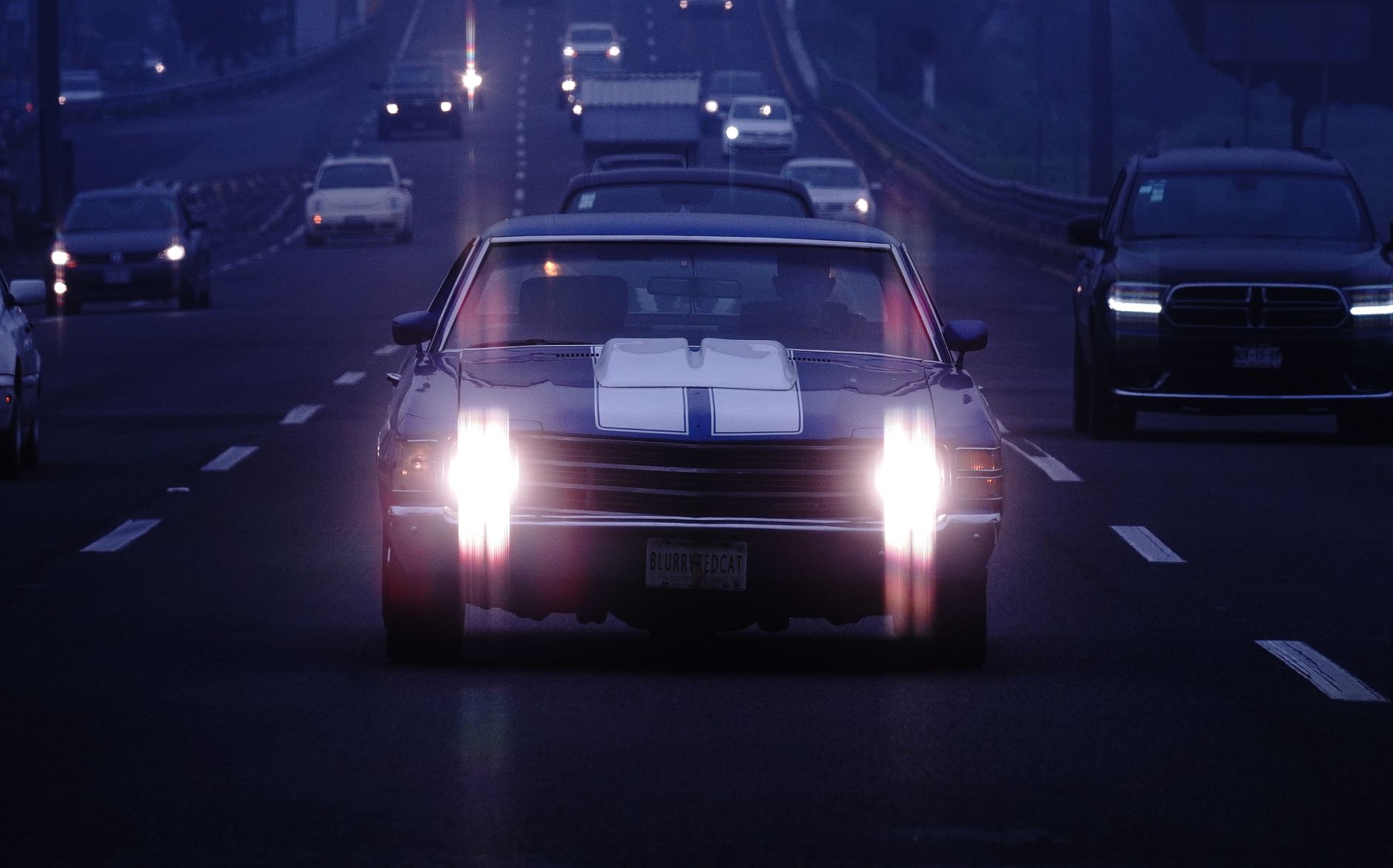
Drive within your headlights
The rule that fixes half of night driving: never drive faster than the distance you can see to stop. On dipped beams that's less road than you think, so on an unlit road at night you slow down, full stop. If something appears at the edge of the light and you can't stop inside the gap, you were going too fast for the dark. The speed limit is a maximum, not a target, and least of all at night.
Use your full beam, and drop it in time
On a dark road with nothing ahead, full beam buys you the extra distance that keeps you safe. The skill is dropping it the moment you see oncoming lights or catch up to a car in front, because dazzling another driver just moves the danger from you to them. Full beam on the empty stretch, dipped the instant there's anyone to blind. Meaning the light, same as meaning the signal.
When an oncoming driver leaves their full beam on, don't look into it. Glance to the left, follow the nearside edge or the line, and ease off until they've passed. Staring at the light kills your night vision for several seconds, and several seconds is a long way at speed. Look away, slow down, let it go by.
Keep your glass clean, inside and out
A smeared windscreen turns every oncoming headlight into a starburst. Grease on the inside of the glass is the usual culprit and nobody notices it until the low sun or the night lights catch it. Clean glass, working wipers, and washer fluid that isn't empty. It's the cheapest safety upgrade there is and the first one people neglect.
Watch for what the dark hides
Pedestrians in dark clothes, cyclists with a dead light, animals on a country road, the black-ice sheen that looks like wet tar. The dark hides all of them until late, so your following distance goes up and your speed comes down, especially on the unlit roads where there's no streetlight to help you. The city's a different job again, and doing your Dublin lessons at dusk teaches the lit-road version fast.
Know when you're too tired to be there
Fatigue at night is its own hazard and it lies to you about how bad it is. Heavy eyes, missing a turn, drifting in the lane, that's not "nearly there," that's your body telling you to stop. There's no trick for tiredness. Coffee buys minutes. The only real fix is to pull in somewhere safe and rest, because a microsleep at seventy doesn't give you a second chance.
The close
Night driving gets boring, in the good way, once you accept that you see less and drive accordingly. Slower, cleaner glass, honest use of the beams, and a proper following gap. Do that and the dark stops being frightening and goes back to being a Tuesday with the lights on.